YCMOU Guess Paper, Solved PYQs and Notes: A Practical Revision Plan


YCMOU Guess Paper, Solved PYQs and Notes: A Practical Revision Plan
Some YCMOU students look for one resource that helps them organise exam revision. A product described as a guess paper with solved previous-year questions (PYQs) and notes can support revision, but each part has a different role. It should sit alongside the official syllabus and learning material, not replace them.
Understand the three parts
- Guess questions: Questions selected as revision prompts. They are not confirmed future exam questions.
- Solved PYQs: Previous-year questions with worked answers that can help you practise how to explain a concept.
- Short notes: Condensed points for reviewing definitions, concepts and key topics after you have studied them.
Examples of listed YCMOU MART products
The PRS-001 product page describes a digital PDF containing guess questions, solved PYQs and short notes. The BCAC-101 listing describes the same broad resource types for that course code. Check the exact course code and product description before choosing either listing.
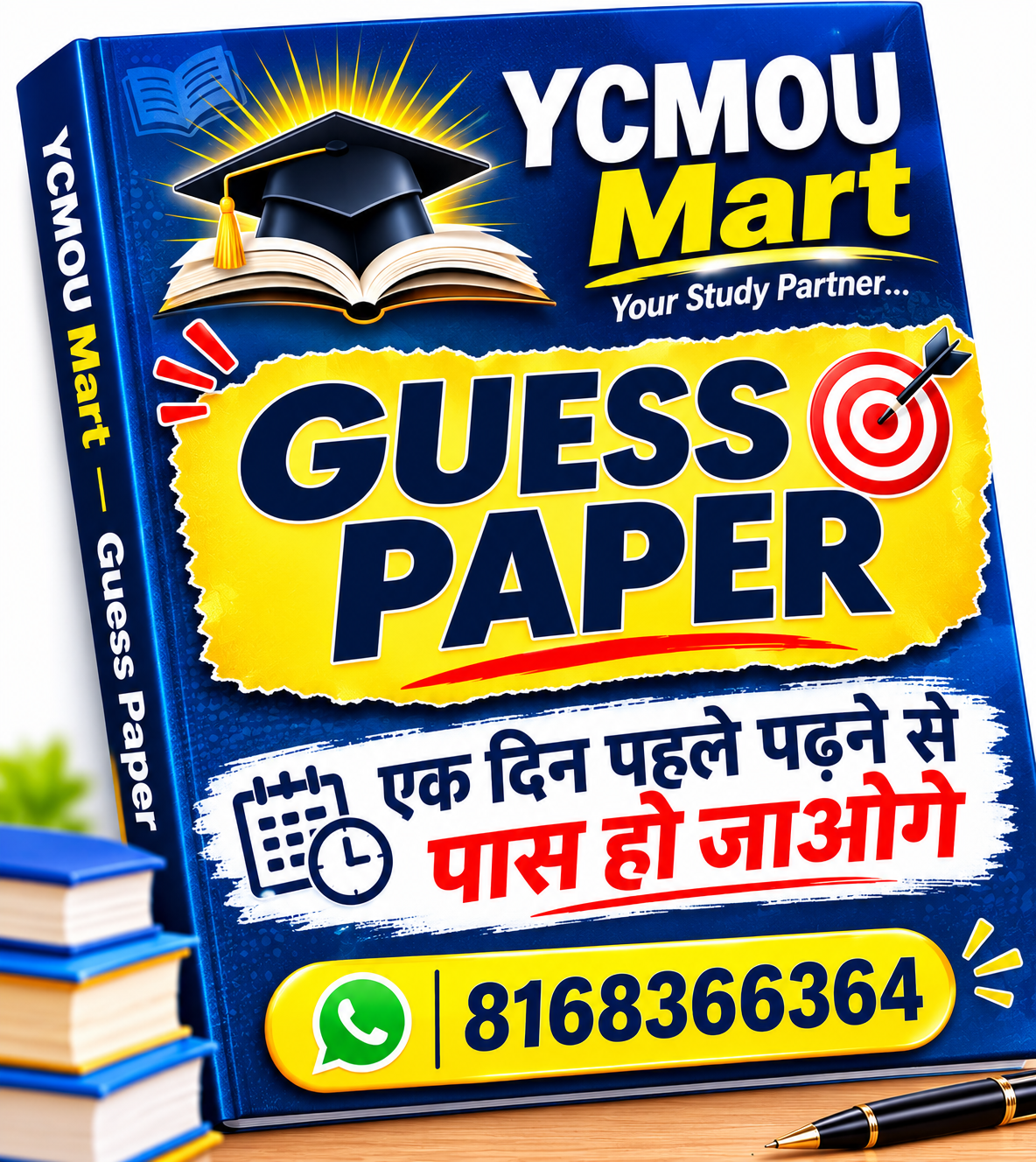
View the course listing: PRS-001 YCMOU Guess Paper, Solved PYQs and Notes.
Another course listing: BCAC-101 YCMOU Guess Paper, Solved PYQs and Notes.
A seven-day revision routine
- Day 1 — Map the syllabus. Review the official course outline and mark the units you have already studied.
- Day 2 — Identify weak topics. Use your notes and prescribed learning material to list concepts that need another review.
- Day 3 — Practise PYQs. Attempt previous-year questions before reading the worked answers.
- Day 4 — Review answer structure. Compare your attempt with a solved reference and note missing explanations or unclear steps.
- Day 5 — Revisit difficult units. Read the official learning material again and make a short summary in your own words.
- Day 6 — Timed practice. Attempt a mixed set of questions without looking at the notes.
- Day 7 — Final check. Review definitions, important concepts and mistakes from your practice. Keep time for rest and exam preparation.
Use official resources as the foundation
Check the university’s Self Learning Material for course learning resources. YCMOU also provides an Old / Sample Question Paper portal with filters for school, programme level, programme and exam event. The relevant school and course should be selected before using a sample paper.
Important limits
A guess paper is a revision aid, not a prediction or a guarantee that the same questions will appear. A PYQ shows a previous exam question, not a promise about the next paper. Keep studying the full prescribed material and check official exam instructions.
Frequently asked questions
Are guess questions guaranteed to appear in the exam?
No. They are revision prompts only. No guess paper can guarantee the questions, marks or result.
Should I read notes before attempting PYQs?
Review the topic first, attempt the question from memory, then use a solved answer to identify gaps.
Can I use a product for a similar course code?
Do not assume that. Match the exact code shown on your course record and the product page.
Conclusion
Use guess questions to focus practice, PYQs to test understanding and notes to revise what you have learned. Keep the official syllabus and YCMOU learning material at the centre of your study plan.
Related reading: Solved assignment vs question paper vs guess paper · Official free YCMOU assignment and study resources.